
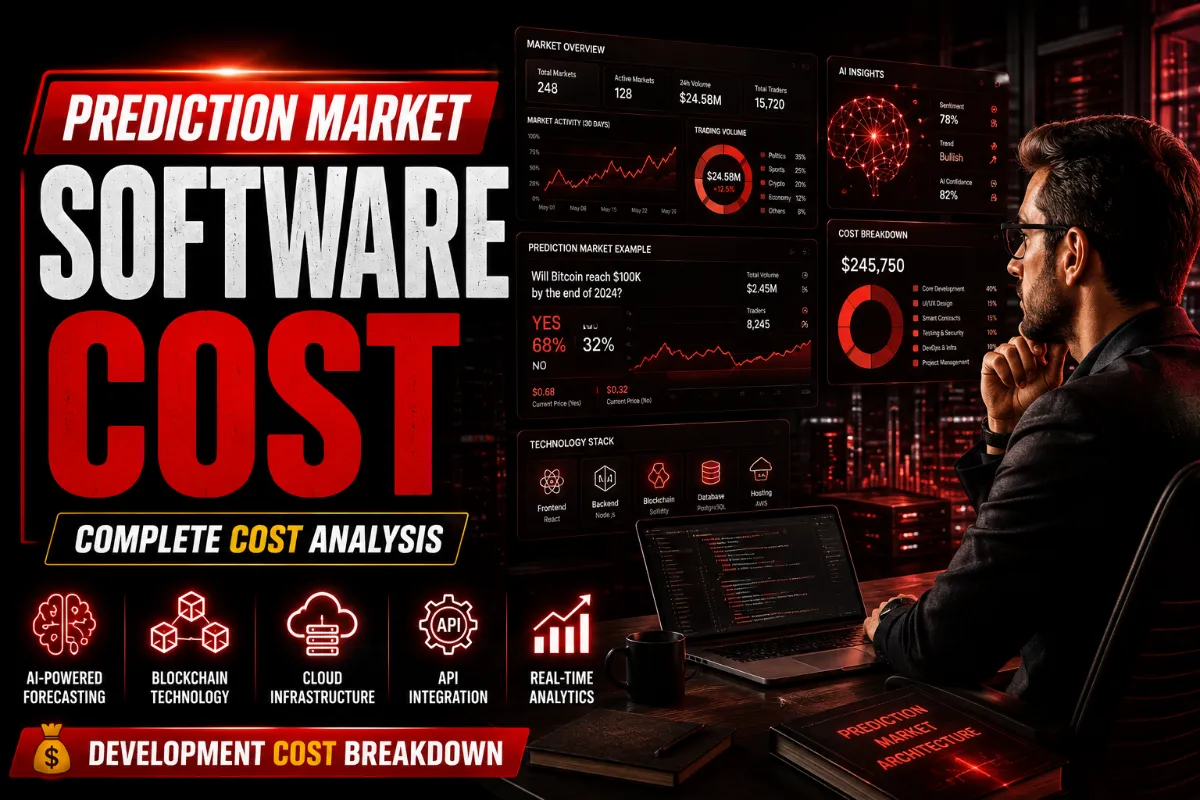
How Much Does It Cost to Develop a Prediction Market Platform?
The way people play online is changing fast. Players don’t just want to click and hope anymore. They want to think, analyse, compete, and feel like their opinion actually matters. That’s why prediction market platforms are suddenly getting so much attention.
But if you’re a founder or CTO looking at building one, the first real question is usually the same:
How much does it actually cost to build a prediction market platform?
There’s no single answer. The cost depends on what you want the platform to do, how many users you expect, how complex the features are, and how serious you are about security and scale. A basic version can start around $50,000. A full-scale platform with AI, real-time data, automation, and enterprise infrastructure can easily go past $500,000.
What exactly is a prediction market platform?
Think of it as a marketplace where people forecast the future. Instead of just placing a bet and waiting, users analyse information, watch how the market moves, and constantly update their predictions based on what others are thinking and what new data comes in.
People use these platforms to:
- Pick events they care about
- Study the available information
- Make predictions
- Track how accurate they (and others) are
- Watch the market shift in real time
You’ll find prediction markets in sports and esports, finance and crypto, entertainment (award shows, reality TV, movie box office), and even inside companies that want better forecasts on consumer behaviour or product demand.

How does it actually work?
- Someone creates an event An admin sets up a question (“Who wins the championship?”), adds the possible outcomes, sets a closing time, and defines how the result will be settled.
- Users jump in Players sign up, look at the data, make their predictions, and can keep adjusting as the market moves.
- The engine does the heavy lifting Behind the scenes, the platform constantly recalculates probabilities based on what people are predicting and any new information that comes in.
- Results get settled Once the real-world outcome is confirmed, the system automatically verifies results, updates accounts, and generates reports. The less manual work here, the better.
Why iGaming companies are interested
The iGaming space is crowded. Operators need new ways to keep players engaged longer. Prediction markets help because they:
- Turn passive betting into active strategy and competition
- Create fresh revenue streams (transaction fees, premium memberships, sponsored events, data products)
- Give operators rich data on what users actually care about and how they think
What you need to build one
A solid prediction platform usually needs:
- A prediction engine – the brain that handles market creation, probability updates, and settlement
- User management – registration, login, profiles, history, and strong security (especially important in iGaming)
- Data integrations – reliable live feeds for sports, markets, stats, etc.
- Solid database and infrastructure – because these platforms generate a lot of data and need to stay fast and secure as they grow
What actually drives the cost?
- How advanced the product is (simple MVP vs full enterprise platform)
- Who you’re targeting (local users vs global audience with multiple languages and currencies)
- How custom everything needs to be
- Technology choices (languages, cloud provider, APIs, security tools)
- Quality and number of third-party data feeds
Cloud infrastructure (AWS, Google Cloud, Azure) and good prediction APIs are pretty much non-negotiable if you want the platform to scale without falling over.
Prediction Market Platform Development Cost Breakdown
Features, Team, Technology & What Really Affects the Investment
Once you understand what a prediction market platform actually is, the next question is always the same: how much is this going to cost us?
The truth is, the price isn’t just about how many hours developers spend coding. It depends on how complex you want the product to be, how many features you need, how reliable the data has to be, how secure everything must be, and how many users you plan to support. A simple platform for a small audience and a global iGaming product with millions of users are two completely different projects.
Let’s break down the main cost areas.
1. Market Management System
This is the control panel for operators. It’s where they create events, set rules, define outcomes, manage timelines, and close markets when needed.
For iGaming, it usually needs to handle sports, esports, entertainment events, and sometimes even financial predictions.
Estimated cost: $15,000 – $50,000 The price goes up if you want automation, multiple market types, and advanced controls.
2. Prediction Engine & Market Logic
This is the real brain of the platform. It decides how predictions are processed and how market prices/probabilities move based on what users are doing.
A basic version handles simple prediction submission, outcome tracking, and probability calculation. An advanced version can include dynamic pricing, statistical models, automated updates, and even machine learning.
Estimated cost: $30,000 – $120,000+ Enterprise-level systems with sophisticated forecasting need specialized developers and data people, so the budget grows quickly.
3. User Engagement Features
If you want people to keep coming back, you need more than just a prediction button. Things that help:
- Leaderboards so users can compete
- Achievement systems that reward accuracy and consistency
- Smart notifications about new events, market changes, and deadlines
Estimated cost: $10,000 – $40,000
These features turn a functional tool into something people actually enjoy using.
4. Analytics & Reporting Dashboard
Operators need clear visibility into what’s happening. A good analytics system tracks user activity, market performance, prediction accuracy, revenue, and engagement trends.
Estimated cost: $20,000 – $75,000 More advanced reporting and risk monitoring push the cost higher, especially for larger platforms.
5. Payments & Transactions
If money is involved, this part has to be solid. You’ll typically need:
- Wallet management
- Deposits and withdrawals
- Transaction history
- Payment gateway integrations
- Support for cards, bank transfers, digital wallets, or even crypto
Estimated cost: $25,000 – $100,000 Security and compliance requirements can significantly increase this number.
6. API Integrations & Data Feeds
Prediction platforms live and die by data quality. You’ll need reliable feeds for sports results, financial markets, stats, event updates, and more.
Building and maintaining these integrations (authentication, real-time syncing, error handling) usually costs $10,000 – $60,000. On top of that, you’ll often pay ongoing fees for data licenses and premium real-time feeds.
7. Mobile Apps
Most users will expect a good mobile experience. Costs roughly look like this:
- Android: $25,000 – $80,000
- iOS: $30,000 – $100,000
- Cross-platform: $40,000 – $120,000
The Team You’ll Need
A solid prediction platform usually requires:
- Product Manager (roadmap, priorities, coordination)
- UI/UX Designers (clean interfaces and smooth user journeys)
- Frontend Developers (dashboards, real-time elements, responsive design)
- Backend Developers (architecture, databases, prediction logic, APIs)
- Data Scientists / AI Engineers (if you’re going beyond basic algorithms)
- QA Engineers (testing functionality, security, and performance)

Typical Technology Choices
Frontend: React, Angular, Vue, or Flutter Backend: Node.js, Python, Java, or Go Databases: PostgreSQL, MySQL, MongoDB, Redis
The right stack affects both performance and long-term maintenance costs.
Cloud Infrastructure Costs
You’ll almost certainly run this on AWS, Google Cloud, or Azure. Rough monthly ranges:
| Stage | Monthly Cloud Cost |
|---|---|
| MVP | $500 – $2,000 |
| Growing platform | $2,000 – $10,000 |
| Enterprise | $10,000+ |
Actual costs depend on traffic, data volume, and how much processing you need.
What Pushes the Price Higher
- Advanced AI and machine learning features
- Blockchain / smart contract integration
- Multi-language and multi-currency support for global markets
- Strict compliance and security requirements
How to Keep Costs Under Control
The smartest approach is usually to start with an MVP - launch the essential features first, test with real users, and then expand. Build on a scalable architecture from day one so you don’t have to rebuild later. And choose a development partner who has actually built similar platforms before, so you avoid expensive architectural mistakes and security issues.
Prediction Market Platform: Business Model, ROI, Maintenance & What’s Coming Next
Building a prediction market platform isn’t just a tech project - it’s a business decision. The real question isn’t only “how much will it cost to build?” but also “how will it make money, what will it cost to keep running, and is it worth it long-term?”
A well-built platform can create several revenue streams while giving users something more engaging than traditional betting or forecasting tools. Here’s a clear look at the business side, ongoing costs, future trends, and common questions.
How Prediction Market Platforms Make Money
There isn’t one single way to monetize these platforms. Most successful ones mix a few models:
1. Transaction Fees Charge a small fee every time users participate in markets or make predictions. This works especially well when there’s high activity. For iGaming platforms, this can become a steady income source as more people join and stay active.
2. Subscriptions Offer premium plans with extras like advanced analytics, exclusive markets, historical data, expert insights, or personalized recommendations. This creates predictable monthly or yearly revenue.
3. API & Data Monetization If your platform collects valuable forecasting data, you can sell access to other businesses through APIs - data licensing, enterprise subscriptions, or custom analytics. This lets you earn beyond just your own users.
4. Sponsorships & Advertising Popular platforms attract brands that want to reach an engaged audience. Sponsored events, featured markets, and brand partnerships can add another revenue layer without interrupting the user experience too much.

Launching is only the start. You’ll need ongoing budget for:
Cloud & Infrastructure Expect roughly:
- Small platforms: $500 – $2,000 per month
- Growing platforms: $2,000 – $10,000 per month
- Large enterprise platforms: $10,000+ per month
Regular Updates & Improvements Bug fixes, new features, performance tweaks, and security patches are continuous. Plan a monthly maintenance budget for this.
Data & API Costs You’ll keep paying for sports feeds, financial data, real-time event updates, and other premium sources. Better data usually means higher ongoing fees.
Security & Compliance Ongoing vulnerability checks, fraud monitoring, and compliance work (especially important in iGaming) are non-negotiable.
How to Think About ROI
Return on investment depends on three big things:
- How many active users you can attract
- How well you keep them coming back (gamification, leaderboards, personalization, and real-time updates help a lot)
- How far you expand - new countries, new event categories, or new user segments
The platforms that treat this as a long-term product (not just a one-time build) usually see better returns.
What’s Coming Next in Prediction Markets
A few clear trends are shaping the future:
AI-powered forecasting Machine learning will get better at spotting patterns, improving prediction quality, and giving users smarter recommendations.
True real-time experiences Users already expect live odds and instant updates. Platforms that deliver faster market movements and automated settlements will stand out.
Blockchain experiments Some platforms are exploring smart contracts for transparent settlements and decentralized systems. It’s not required for everyone, but it can add trust in certain use cases.
Mobile-first design Most users will interact on their phones. Fast mobile experiences, push notifications, and easy mobile payments are becoming table stakes.
Smarter use of data The platforms that turn user behavior and market data into real business intelligence will have a clear edge.
Choosing the Right Approach
Before you start building:
- Be clear about your main focus (sports/iGaming, finance, entertainment, or enterprise forecasting)
- Start with the essential features and expand based on real user feedback
- Design for scale from day one so you don’t have to rebuild later
- Work with a team that has actually built similar platforms - architecture and security mistakes get expensive
Final Thoughts: Is It Worth Building?
Demand for prediction-style experiences is growing, especially in iGaming. Development costs typically range from $50,000 for a solid MVP to $500,000+ for advanced, enterprise-grade platforms. The investment makes sense if you have a clear monetization plan, focus on user experience, and treat the platform as a product that will evolve over time.
Done right, a prediction market platform can open new revenue streams and deepen engagement with your audience.
Quick FAQ
How much does it cost to build one? Usually between $50,000 and $500,000+, depending on features, complexity, data needs, and scale.
How long does it take? A basic MVP often takes 3–5 months. More advanced platforms can take 9–18 months.
What affects the cost most? Features, team location, API integrations, cloud setup, AI requirements, and security/compliance needs.
Are prediction APIs important? Yes. They bring in real-time sports results, financial data, event updates, and stats that keep the platform accurate and automated.
Can one platform serve different industries? Absolutely - sports, finance, entertainment, esports, and business forecasting can all run on similar foundations.
Is AI necessary? Not required, but it can meaningfully improve forecasting quality, recommendations, and insights.
Does blockchain help? It can improve transparency and trust, but it also increases complexity and cost. It’s optional for most projects.
What’s a common tech stack? React or similar on the frontend, Node.js or Python on the backend, PostgreSQL/MongoDB for data, and cloud providers like AWS.
How can we keep costs under control? Start with an MVP, reuse reliable existing APIs where possible, prioritize the features that matter most, and choose scalable technology from the beginning.
Why should iGaming companies care? Prediction platforms give players a more strategic, interactive experience - which usually means better engagement, higher retention, and new ways to generate revenue.
